
Not All Skincare Is Created Equal: Discover what really separates professional skincare from over the counter.
Not All Skincare Is Created Equal
Discover what really separates professional skincare from over the counter.
Medical Grade Skincare vs. Over the Counter Skincare, What’s the Difference?
The Right Ingredients. The Right Formulation. The Right Skin.
Walk into any large well known retailer like Sephora, Ulta, CVS, or Target and you will find shelves filled with skincare products promising brighter, smoother, healthier, younger looking skin. With so many options available, it can be difficult to understand why a professional skincare product may cost more, or what truly separates the products we recommend at Radiance Advanced Skincare & Laser from those you can purchase over the counter. The answer is more than just the price tag or the packaging.
At Radiance, we believe skincare should be approached with the same level of thought and personalization as any other part of your treatment plan. The products you use at home significantly influence the health of your skin, the results you see from professional treatments, and how well your skin maintains those results over time.
What Does "Medical Grade" Actually Mean?
You may hear the terms medical grade, clinical grade, physician grade, or professional skincare used interchangeably. It is important to understand that "medical grade" is not an official FDA classification. In fact, the FDA does not recognize "cosmeceutical" as a separate regulatory category either. Products are generally regulated as cosmetics, drugs, or, in some cases, both, depending on their intended use and claims.
So what are we actually referring to when we talk about professional or medical grade skincare? We are referring to products specifically selected for use in a professional setting (that requires a Medical Director), often with sophisticated formulations, carefully selected active ingredients, specialized delivery systems, clinical research, and professional guidance behind their use.
The difference is not simply that one product is sold in a medical practice and another is sold in a retail store. The bigger difference is in the formulation, the research supporting it, how the ingredients are delivered, how the product is intended to be used, and the professional guidance that accompanies it.
Clinical Research Matters
One of the biggest differences between professional skincare and many mass market products is the amount and type of research behind the formulation. A beautiful package and an impressive ingredient list do not necessarily tell you how well a product will perform on the skin. A product may contain vitamin C, peptides, retinol, antioxidants, or hyaluronic acid (ALL ingredients we love!), but the presence of an ingredient alone does not tell us its concentration, stability, delivery system, or whether the finished formulation has been clinically evaluated.
Professional skincare companies often invest heavily in research and development, ingredient testing, formulation technology, stability testing, and clinical studies designed to evaluate the finished product. This is an important distinction.
It is not enough to ask, "Does this product contain retinol?" A better question is, "What form of retinoid is being used, at what concentration, in what formulation, how is it stabilized and delivered, and what evidence supports the finished product?" The same principle applies to antioxidants, peptides, growth factors, acids, pigment correcting ingredients, and other active ingredients.
Don’t Just Read the Label, Understand It
Two products can contain the same ingredient and still perform very differently. For example, two serums may both contain vitamin C, but they may use different forms of vitamin C, different concentrations, different stabilizing ingredients, and different delivery systems. One may remain stable and effective on the skin, while another may oxidize more readily or provide a much different level of activity. The same is true for retinoids, exfoliating acids, peptides, antioxidants, and other active ingredients.
Professional skincare formulations are often designed around the entire delivery system, not simply the ingredient itself. This is why we do not recommend choosing skincare based solely on an ingredient list or a product's popularity on social media.
As skincare professionals and experts in this field, we are here to guide you through these considerations and help you select products that are appropriate for your individual skin and goals. We take into account molecular size, formulation, active ingredients, and how products may interact with one another, including the compatibility of their ingredients, so that your routine is both effective and thoughtfully designed. Our goal is not simply to recommend a product containing a particular ingredient, but to ensure that the products you use work together as part of a comprehensive skincare approach.
Efficacy Is More Than About an Ingredient List, It’s About the Formulation
There is a common misconception that professional skincare is simply stronger than over the counter skincare, but this is not necessarily the best way to think about it. A well formulated professional product is not simply about making an ingredient more potent. It is about delivering the right ingredient, in the right formulation, at the right concentration, to the right area of the skin, while maintaining tolerability and consistency.
And more is not always better. In fact, using an overly aggressive product without professional guidance can result in irritation, inflammation, impaired skin barrier function, or worsening of concerns such as redness, pigmentation and dryness. Our goal is not to make your skincare routine as aggressive as possible. Our goal is to make it as effective as possible.
FDA Regulation: When It Comes to Skincare, Quality Matters
This is another area where there is a great deal of misinformation. Cosmetic skincare products, whether purchased from a medical practice or a retail store, generally do not require FDA approval before being placed on the market. The FDA does regulate cosmetics, but its authority is primarily post market, and manufacturers are responsible for ensuring that their products are safe and properly labeled.
Certain products, however, are regulated as drugs or as both cosmetics and drugs. Sunscreens are one familiar example, as are certain acne treatments and other products making therapeutic claims. Drugs have substantially different regulatory requirements, including requirements related to approval and manufacturing.
This is why we do not want to tell clients that a product is "FDA approved" simply because it is professional skincare. That would be misleading. Instead, what matters is looking at the complete picture, including the quality of the formulation, the ingredients, the research, the manufacturer's standards, the clinical data, and how the product is recommended and used.
Professional Guidance Makes a Difference
Perhaps one of the most important differences between purchasing skincare from a retail shelf and purchasing it through a medical practice is the guidance that comes with it. At Radiance Advanced Skincare & Laser, skincare recommendations are not based on what is trending or what has the most followers online. We consider your skin type, skin concerns, current products, treatments you are receiving, tolerance, goals, and the overall health of your skin.
Professional skincare can also be highly active. When used incorrectly, even excellent products can cause irritation or compromise the skin barrier. That is why we believe skincare should be viewed as part of your overall treatment plan rather than a collection of individual products.
The Professional Brands We Trust
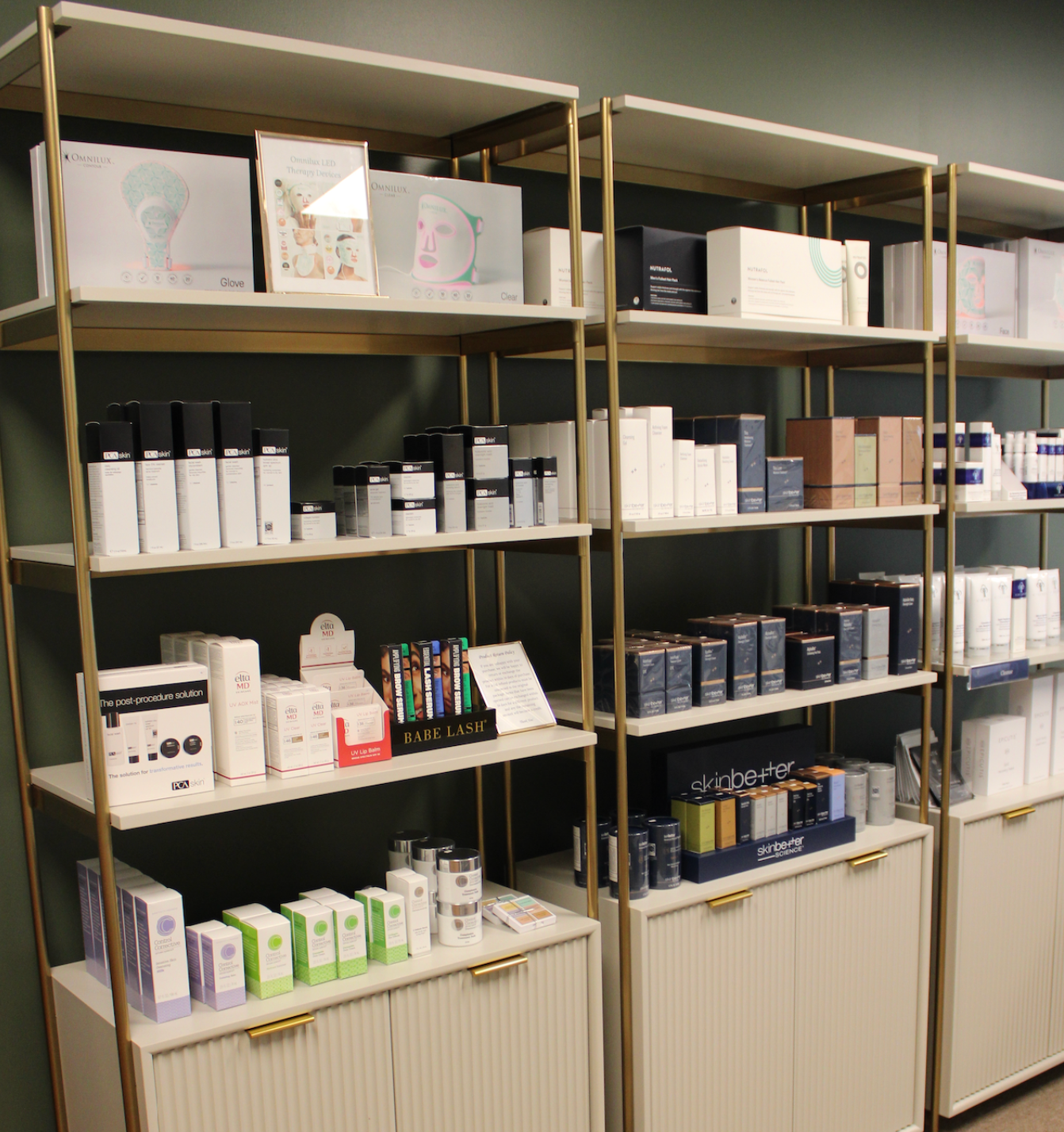
At Radiance Advanced Skincare & Laser, we carefully select the professional skincare lines we carry based on formulation quality, ingredients, clinical research, efficacy, and how well they complement the treatments we provide.
Our professional skincare collection includes:
Skinbetter Science, known for advanced formulations targeting concerns such as signs of aging, pigmentation, and overall skin quality.
Epicutis, focused on sophisticated formulations designed to support the skin barrier, hydration, and overall skin health.
Circadia, a professional skincare line built around skin physiology and the relationship between the skin and its natural circadian rhythms.
PCA Skin, a long established professional skincare brand known for scientifically formulated products and professional treatment protocols.
Anfisa, offering targeted formulations designed to complement a comprehensive approach to skin health and aesthetics.
EltaMD, particularly well known for its professional sunscreens and daily UV protection, an essential component of virtually every effective skincare routine.
Control Corrective, offering professional formulations designed to address a variety of skin concerns while supporting healthy, balanced skin.
We do not carry these products simply because they are labeled professional. We carry them because we believe they provide meaningful value within a professionally guided skincare program. Professional skincare leads to professional results.
The TikTok Effect, When Viral Skincare Meets Your Skin
Social media has completely changed the way we discover skincare. TikTok, Instagram, YouTube, and beauty influencers can introduce us to new products, ingredients, and routines within seconds. There is nothing wrong with discovering a product through social media, and many influencers genuinely share products they love. The important thing to remember is that a product going viral does not necessarily mean it is clinically proven, appropriately formulated, or right for your skin.
Not all skincare is created equal. An influencer's skin, lifestyle, age, environment, and existing skincare routine may be completely different from yours. What works beautifully for one person may cause irritation, dryness, breakouts, or unwanted pigmentation in someone else. In addition, social media content often focuses on visible, immediate results, while meaningful changes in skin health can require consistency and time.
Before purchasing a product simply because it is trending, consider what is actually behind the claims. What active ingredients does it contain? In what form and concentration? Is there clinical research supporting the finished formulation? Is the product appropriate for your skin type and concerns? How does it fit into the other products and professional treatments you are already using?
One extremely important thing to keep in mind before clicking “add to cart” is that the majority of celebrities and influencers, who have branded their own skincare lines, do not use their own products. Their beautiful healthy skin is the result from professional guidance, treatments and/or cosmetic procedures, medical grade skincare, and of course those infamous filters.
The Growing Concern With Online and Third Party Sellers
There is another issue we want our clients to be aware of, particularly when purchasing professional skincare online. You may see professional skincare brands being sold through Amazon, eBay, social media marketplaces, or other third party websites, sometimes at prices that appear too good to be true. We strongly recommend purchasing professional skincare directly from the brand, an authorized retailer, or a trusted medical practice.
When purchasing professional skincare from an unauthorized third party, the concern goes far beyond simply receiving a “fake” product. Counterfeit skincare has become increasingly sophisticated, with some fraudulent products so closely replicating the packaging, labeling, and appearance of the original that they can be nearly impossible to recognize as counterfeit. These products are intentionally designed to look authentic, making it difficult for even an experienced consumer to distinguish a genuine product from a highly realistic dupe.
What you cannot see, however, is what is inside the package. With an unauthorized seller, there is no assurance that the product is authentic, has been stored properly, has remained sealed, is within its intended shelf life, or contains the original formulation. Products may be diluted, tampered with, expired, contaminated, improperly stored, or completely counterfeit, and these issues can affect both the safety and effectiveness of what you are putting on your skin.
For this reason, we strongly recommend purchasing your professional skincare products through authorized sources. When it comes to your skin, saving a few dollars is simply not worth the risk. Authenticity, proper storage, and product integrity matter, and we want you to feel confident that what you are applying to your skin is exactly what the manufacturer intended. After all, it’s your face and we don’t believe it’s worth the potential damaging risks.
Your Skincare Is Part of Your Treatment Plan
Professional treatments can make a significant difference in the health and appearance of your skin, but what you do at home matters just as much. Think of your professional treatments as one part of the equation and your daily skincare routine as another. Laser treatments, chemical peels, microneedling, injectables, and other aesthetic treatments can help address specific concerns, but maintaining healthy skin requires consistency between appointments.
The right skincare routine can help support the skin barrier, protect against environmental damage, address pigmentation and signs of aging, maintain hydration, and maximize the results of your professional treatments. Ultimately, effective skincare is not about having the most products on your bathroom counter. It is about having the right products, with the right ingredients, in the right formulations, used consistently and appropriately for your skin.
At Radiance Advanced Skincare & Laser, our goal is not simply to recommend another product. Our goal is to educate you about your skin, help you understand why we recommend certain ingredients and formulations, and create a skincare routine that works alongside your professional treatments.
Because when it comes to your skin, informed decisions lead to better results.